Where to Stay in Milan
Your guide to the best areas and accommodation types
Milan splits into neighborhoods that march to their own rhythm and price tag. The centro storico around the Duomo grabs the highest rates and the tightest knot of landmarks; Brera and Navigli give you real character without the same surcharge. Stazione Centrale is the no-nonsense pick for late arrivals and long rail hauls.
Neighborhood choice matters more here than in most Italian cities. The tram network is solid. But the wrong booking call lands you 20-minute rides to dinner.
Budget
€25-55 per night for hostels and basic hotels
Mid-Range
€100-200 per night for 3 and 4 star hotels
Luxury
€350-800 per night for 5-star properties
Where to Stay in Milan
Hand-picked hotels across price tiers for every visitor.
Best Areas to Stay
Each neighborhood has its own character. Find the one that matches your travel style.
Hotel recommendations verified
Duomo
Mid-range to Luxury
The cathedral district is Milan's civic and commercial heartbeat. The white marble facade of the Duomo rises dead center. The glass-vaulted Galleria Vittorio Emanuele II arcs north; La Scala sits four minutes northwest on foot. Piazza noise floats through hotel windows on summer nights and the streets clear slowly after midnight.
- ✓ Every major Milan landmark within a 10-minute walk
- ✓ M1 and M3 metro lines intersect at Duomo station
- ✓ Widest hotel choice at every price tier in the city
- ✓ Fine dining and aperitivo bars on every block
- ✗ Loudest neighborhood in Milan, weekends when the piazza swells until midnight.
- ✗ Rates spike sharply during fashion weeks and the April design fair
Recommended places to stay in Duomo
Mid-range to Luxury
North of the Duomo, Brera releases the scent of fresh espresso from indie cafés on Via Fiori Chiari and the cobbles are uneven underfoot. The Pinacoteca di Brera anchors the zone. Boutique galleries, design showrooms, and Milan's densest aperitivo bar lineup pack the side streets.
- ✓ Pinacoteca di Brera and the botanical garden within a five-minute walk
- ✓ Calmer street atmosphere than the Duomo at night
- ✓ Best concentration of aperitivo bars in all of Milan
- ✓ Via Montenapoleone shopping district reachable on foot in 10 minutes
- ✗ Very few budget options exist within the quarter itself
- ✗ Limited metro access. M2 Lanza is the closest stop, a 10-minute walk from the core.
Recommended places to stay in Brera
mid_range
Hotel Manzoni
Budget to Mid-range
Southwest of the center, the Naviglio Grande and Naviglio Pavese canals frame a zone of converted warehouses, street art, and Saturday antiques markets. Canal water scent mingles with charcoal smoke from trattorie at aperitivo hour, and the clink of glasses plus chatter drifts along the towpath past midnight.
- ✓ Cheapest restaurant prices of any central Milan neighborhood for the quality on the plate.
- ✓ Saturday antiques market along the Naviglio Grande is the best in the city
- ✓ Tram 2 runs directly to the Duomo in 15 minutes
- ✓ Canal-side walk at dusk is one of Milan's great free pleasures
- ✗ Aperitivo bar noise carries into 02:00 on Friday and Saturday nights
- ✗ Luxury hotel supply is thin, most properties are mid-range or below
Recommended places to stay in Navigli
mid_range
Maison Borella
Porta Nuova
Mid-range to Luxury
Milan's 21st-century skyline: the gleaming Unicredit Tower, the vine-draped Bosco Verticale, and the curved glass of Piazza Gae Aulenti. The district feels clean and corporate by day. The Isola quarter just north gives a grittier, more local counterpunch with indie bars and street art along narrow lanes.
- ✓ M2 and M5 lines at Garibaldi station, linking straight to the Duomo and Malpensa airport express.
- ✓ Modern hotel infrastructure built for business travel with strong connectivity.
- ✓ Eataly flagship and some of the best third-wave espresso bars in Milan
- ✓ Quieter evenings than the Duomo or Navigli districts
- ✗ The streetscape empties and feels sterile once the offices close at 19:00
- ✗ Historic center is a 20-minute walk or two metro hops away, not good for sightseeing-heavy itineraries.
Recommended places to stay in Porta Nuova
mid_range
Starhotels E.c.ho.
Stazione Centrale
Budget to Luxury
The zone around Milan's monumental art deco railway station, all polished granite, soaring stone arches, and the echo of departure boards, is practical rather than pretty. Every high-speed train to Rome, Florence, Venice, and Zurich passes through here. The streets beyond the piazza hold the city's densest cluster of hotels at every price tier.
- ✓ Fastest connections to every major Italian city and onward to Switzerland
- ✓ Dense cluster of Milan hotels within 300 meters of the platforms at every price level
- ✓ M2 and M3 metro lines intersect at Centrale F.S., covering the entire city
- ✓ Accessible at any hour without taxi dependency
- ✗ The piazza and surrounding streets carry a transient, unglamorous atmosphere at all hours
- ✗ Platform noise and early-morning bus traffic start from 05:30 onward
Recommended places to stay in Stazione Centrale
mid_range
Hotel Michelangelo
Porta Venezia
Budget to Luxury
East of the Duomo, Porta Venezia is defined by ornate Liberty-style apartment facades, the cool shade and birdsong of Giardini Pubblici Indro Montanelli, and the commercial energy of Corso Buenos Aires. The neighborhood is residential in a way the center is not. Local trattorie and neighborhood bars outnumber tourist-facing operations.
- ✓ Giardini Pubblici offer a genuine green escape. Birdsong and the smell of cut grass in the middle of Milan.
- ✓ Corso Buenos Aires has every chain and independent store within one continuous kilometre.
- ✓ M1 Porta Venezia and M1 Lima stations bracket the neighborhood on both ends
- ✓ Liberty-era facades and local trattorie on quieter streets away from the main boulevard.
- ✗ A 20-minute walk to the Duomo, not practical for a single-night transit stay
- ✗ Corso Buenos Aires is congested with trams and pedestrians from 09:00 to 20:00 on weekdays.
Recommended places to stay in Porta Venezia
mid_range
Hotel Manin
Find Hotels in Milan
Compare prices and book your perfect stay
Find the best hotel for your stay on Trip.comPrices via Trip.com. We may earn a commission from bookings.
Accommodation Types
From budget-friendly hostels to luxury hotels, here's what's available.
Boutique Hotels
€100-400 per night
Historic-palazzo properties with parquet floors and staff who know the neighborhood cold. Milan's strongest hotel category at any budget.
Best for: Travelers wanting design, local character, and staff who book tables rather than just recite restaurant names.
Compare prices onlinely through the hotel. Boutique properties typically offer breakfast, room upgrades, or late check-out that OTA platforms cannot match.
International Chain Hotels
€60-800 per night
Near Stazione Centrale and Porta Nuova, spanning ibis budget to Marriott Luxury Collection. Reliable standards with none of the character.
Best for: Business travelers, loyalty program members, and anyone arriving by rail who values predictability over atmosphere.
Corporate rates on chain loyalty apps frequently beat public prices. midweek when business demand drops on Fridays.
Hostels
€25-70 per night
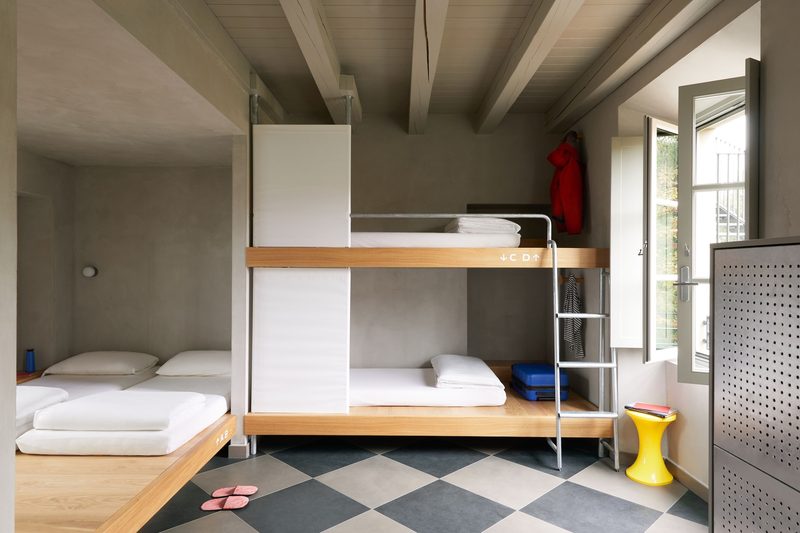
Both Ostello Bello locations offer private rooms, dorms, and a free aperitivo included in the nightly rate. A small but strong scene.
Best for: Solo travelers and backpackers who want a built-in social scene without paying bar prices every evening.
Private rooms book out three to four weeks ahead during Salone del Mobile in April. Dorm beds hold longer but disappear in the final two days before the fair opens.
Serviced Apartments
€80-250 per night
Strongest in Porta Venezia, Isola, and Sempione. Most require a three-night minimum and offer kitchen access for self-catering visits.
Best for: Stays of four nights or more, families, and travelers who eat breakfast in rather than out.
Confirm the cleaning and linen schedule before arriving. Many Milan serviced apartments charge separately for mid-stay service that hotel guests receive automatically.
Booking Tips
Insider advice to help you find the best accommodation.
Fashion weeks and Salone del Mobile empty the affordable tier city-wide
Milan hosts four major industry events annually. Men's and women's fashion weeks in January, February, September, and October, plus Salone del Mobile in April. Mid-range rates double during these periods and budget rooms disappear within days of dates being announced. Book eight to ten weeks ahead for any of these windows or choose a different week entirely.
Duomo and Brera rarely have last-minute availability from April through October
Both neighborhoods run close to capacity throughout the warm season. Last-minute arrivals consistently find better availability in Porta Venezia and Stazione Centrale. Both are 15 to 20 minutes from the center by metro and hold rooms further into the booking window.
Direct booking beats online travel agencies at boutique properties
At properties like Maison Borella, Hotel Gran Duca di York, and Château Monfort, calling or emailing directly typically yields a room upgrade, a later check-out, or a better breakfast arrangement. Exactly the kind of negotiation that OTA platforms are structured to prevent.
When to Book
Timing matters for both price and availability.
High Season
Reserve 6-8 weeks ahead for April, September, and October. Fashion week dates need 10-12 weeks for mid-range and up to six months for flagship luxury properties during the shows.
Shoulder Season
May to early June and November are the sweet spots. Warm or crisp weather, lower rates, and a city recovering from event peaks. Two to three weeks covers most situations.
Low Season
July and August see Milanese residents leave and tourist traffic thin. Rates fall and last-minute rooms are available across the city. January and February outside fashion week dates are the cheapest weeks of the calendar year. Locals flee. Prices drop. You win.
Good to Know
Local customs and practical information.
Check-in / Check-out
Standard check-in from 14:00, check-out by 11:00. Italian hotels are generally accommodating about luggage storage for early arrivals and late departures. Ask at booking, not at the desk the day of arrival. Do this. Saves hassle.
Tipping
Not customary in Milan. One euro per night left for housekeeping is a genuine gesture. Tipping the front desk is not expected and can read as awkward in smaller boutique properties. Keep the coins. Skip the desk.
Payment
Cards accepted universally at three-star properties and above. Some small B&Bs and guesthouses in Navigli and Porta Venezia prefer cash. Confirm when booking. ATMs sit on every major street in the center. Easy.
Safety
Milan's central neighborhoods are safe by any reasonable measure. Pickpocketing is the primary risk near the Duomo piazza and on packed metro and tram lines. Keep bags zipped and stay aware in dense crowds around the cathedral. Simple rules. Stay sharp.
Ready to plan your trip to Milan?
Now that you've got the research covered, here's where to go next.